|
|
|
Untitled Document

|
Yield increase |
|
Materials of this chapter are published in article: Agricultural and economical effectiveness
of Albit. Alehin V., Slobodjanyuk B., Zlotnikov A.K. Plant protection and quarantine Nr 9., page
26-27, (2005)
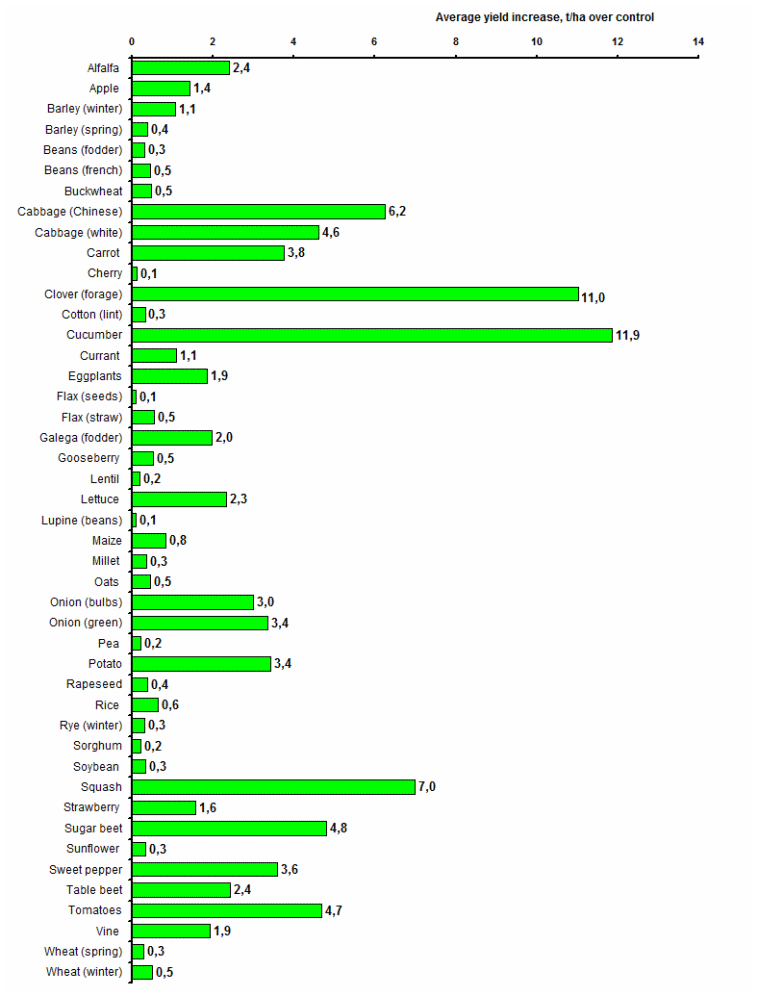
Fig. 1. Average yield increase (t/ha) obtained with Albit
treatment in Russian Federation (crops are given in alphabetical order)
The main purpose of Albit is growth promotion and yield increase. In Russia
Albit is registered as growth regulator on more than 50 crops (Reg. No.
081-07-866-1).
Albit stably increases yield of cereals, sugar beet, sunflower, potato, flax,
vegetables, legumes, horticultural crops, fodder grasses and other main agricultures
by 12-23%.
Basing on data of field trials (1997-2004) average yield increase of different
cultures under Albit influence was calculated (Table 1). It is necessary to
note, that this summarizing table contains data taken from different regions
of Russia in different years. In favorable conditions yield increase might
be considerably greater. For example, yield increase of sugar beet obtained
in Chapaev Pedigree cattle farm of Krasnodar region with double Albit foliar
spray has reached in 1999 of 31,3 % (81 centners/hectare). With Albit assistance,
yield increase of winter wheat, spring wheat, sunflower and flax straw might
reach 12,5, 7,6,5,5 and 13 centners/hectare respectively.
Table 1. Influence of Albit on the productivity
of agricultures (average data of all field trials conducted since 1997).
The most important parameter of each crop is given in bold: e.g. grain
yield for wheat, yield of green mass for flax and fodder grasses. (--) - no data
| Crop |
Yield increase |
Yield increase of green biomass |
Source
(institutions conducted tests) |
| t/ha |
% |
t/ha |
% |
Alfalfa |
0.7 |
17.3 |
2.4 |
33.9 |
All-Russia Institute of Vegetable Selection
and Seed Breeding (2001); All-Russia Institute of Plant Protection (2003) |
Apple |
1.4 |
8.5 |
- |
- |
All-Russia Institute of Plant Protection
(2003); All-Russia Institute of Horticulture (2002) |
Barley (spring) |
0.4 |
19.6 |
- |
- |
All-Russia Institute of Leguminous and Groat
Crops (2002, 2004-2006); All-Russia Institute of Plant Protection (2002,
2004-2006); Far East Institute of Plant Protection (2002); Soil institute
(2002); Kurgan Institute of Grain Growing (2001); All-Russia Institute
Agrochemistry (1997-2001); Lipetsk State Sort Testing Station (2003);
Ryazan Agricultural Academy (2001); Vladimir (2003, 2004), Voronezh (2002),
Kirov (2004); Kostroma (2006), Kurgan (2000), Kursk (2002), Lipetsk (2002-2003),
Penza (1997-1998), Primorye (2002), Saratov (1999-2001), Tula (2003),
Yaroslavl (2002) regional plant protection stations, Karachev Plant Protection
Station of Bryansk region (2004), Agricultural farm «Kushchevskoe» of
Krasnodar Kraj (2004); Saratov Institute of Plant Protection (2005);
Panichkin Cooperative farm of Saratov region (2006); Agricultural farm
“Rossia” of Rostov region (2005); Krasnodar Institute of Plant Protection
(2005) |
Barley (winter) |
1.1 |
21.6 |
- |
- |
Chapaev pedigree cattle farm (2003), Pedigree
cattle farm "Kuban" (2003-2004), Agricultural farm «Yug Agrobusiness»
(2004) of Krasnodar kraj |
Beans (fodder) |
0.3 |
8.4 |
- |
- |
All-Russia Institute of Vegetable Selection
and Seed Breeding (2001), Institute of Field Crops Breeding (Stende)
and
State Institute of Field Crops Breeding (Priekuli) Latvia (2015) |
Beans (french) |
0.5 |
16.3 |
- |
- |
All-Russia Institute of Vegetable Selection
and Seed Breeding (2001, 2003) |
Buckwheat |
0.5 |
52.8 |
- |
18.9 |
All-Russia Institute of Leguminous and Groat
Crops (2002-2003, 2006); Agricultural farms “Rassvet”, “Shulginskiy”,
“Altay” of Altay kray (2006); |
Cabbage (Chinese) |
- |
- |
6.2 |
12.5 |
All-Russia Institute of Vegetable Selection
and Seed Breeding (2001) |
Cabbage (white) |
- |
- |
4.6 |
12.0 |
All-Russia Institute of Vegetable Selection
and Seed Breeding (2001, 2003); Vladimir regional plant protection station
(2004) |
Carrot |
3.7 |
10.9 |
- |
- |
All-Russia Institute of Vegetable Selection
and Seed Breeding (2001, 2003) |
Cherry |
1.1 |
6.5 |
- |
- |
All-Russia Institute of Vegetable Selection
and Seed Breeding (2001); |
Clover |
|
|
11.0 |
36.0 |
All-Russia Institute of Plant Protection
(2008); Vladimir regional plant protection station (2006) |
Cucumber |
11.9 |
20.7 |
- |
- |
All-Russia Institute of Vegetable Selection
and Seed Breeding (2001, 2003); Leningrad Regional Plant Protection Stations
(2001, 2002); All-Russia Institute of Plant Protection (2006) |
Currant (black) |
1.1 |
34.6 |
- |
- |
All-Russia Institute of Plant Protection
(2002, 2003); All-Russia Institute of Vegetable Selection and Seed Breeding
(2001) |
Eggplants |
1.9 |
23.2 |
- |
- |
All-Russia Institute of Vegetable Selection
and Seed Breeding (2001) |
Flax |
0.1 |
35.6 |
0.5 |
17.6 |
All-Russia Flax Institute (2002-2003); Pskov
regional plant protection station (2002) |
Galega (fodder) |
0.04 |
16.2 |
1.96 |
21.7 |
All-Russia Institute of Vegetable Selection
and Seed Breeding (2001, 2003), Vladimir Regional Plant Protection Station
(2004) |
Gooseberry |
0.5 |
28 |
- |
- |
All-Russia Institute of Vegetable Selection
and Seed Breeding (2001) |
Lentil |
0.2 |
24.9 |
- |
- |
All-Russia Institute of Vegetable Selection
and Seed Breeding (2001); All-Russia Institute of Sorghum and Maize “ROSSORGO”
(2009); All-Russia Institute of Leguminous and Groat Crops (2006) |
Lettuce |
- |
- |
2.3 |
12.7 |
All-Russia Institute of Vegetable Selection
and Seed Breeding (2001, 2003, 2004) |
Lupine |
0.1 |
14.3 |
- |
- |
All-Russia Institute of Vegetable Selection
and Seed Breeding (2001) |
Maize |
0.4 |
11.6 |
5.7 |
14.7 |
All-Russia Institute of Plant Protection
(2002-2004) |
Millet |
0.3 |
26.1 |
- |
- |
All-Russia Institute of
Leguminous and Groat Crops (2002, 2003); Agricultural Research Institute
for South-East Region (ARISER) (2004); Saratov Regional Plant Protection
Stations (1999, 2001) |
Oats |
0.46 |
15.7 |
1.1 |
9.7 |
Agricultural corporation “Krasnyi rog” of
Bryansk region (2004); Ryazan, Vladimir Regional Plant Protection Stations
(1998, 2012); All-Russia Institute of Plant Protection (2010-2012) |
Onions |
3.0 |
17.6 |
3.4 |
17.6 |
All-Russia Institute of
Vegetable Selection and Seed Breeding (2003, 2004); Yu. P. Kim Farm of
Rostov region |
Pea |
0.2 |
12.8 |
- |
18 |
All-Russia Institute of Leguminous and Groat
Crops (2001-2003); All-Russia Institute of Vegetable Selection and Seed
Breeding (2001); Agricultural farm “Russkoe pole” of Orel region (2004) |
Potato |
3.43 |
20.0 |
- |
- |
All-Russia Institute of Plant Protection
(2003, 2004); All-Russia Institute of Vegetable Selection and Seed Breeding
(2001); Bashkir State Agrarian University (2001, 2002); Cooperative farm
“Odoevskye zori” of Tula region (2004), “Merisystemnye kultury” Stavropol
Kray (2003) |
Rapeseed |
0.38 |
28.7 |
|
|
All-Russia Institute of Plant Protection
(2006); All-Russia Institute of Biological Plant Protection (2006-2007);
Agricultural Research Institute for South-East Region (ARISER) (2005,
2006); Czech association of producers of oil crops (2010); OU Kullasaare,
Estonia (2010); ZS Ainava 1, Latvia (2010); ZS Vaiculevas, Latvia (2010) |
Rice |
0.65 |
12.9 |
- |
22.5 |
All-Russia Institute of Biological Plant
Protection (2004); All-Russia Institute of Rice (2004, 2014, 2015) |
Rye (winter) |
0.3 |
22.3 |
- |
- |
Penza (1997-1998), Saratov (2000) regional
plant protection stations |
Sorghum |
0.22 |
17.5 |
|
|
Kalinenko All-Russia Institute of Cereals
Crops (2009); All-Russia Institute of Sorghum and Maize “ROSSORGO” (2009) |
Soybean |
0.3 |
19.6 |
- |
- |
All-Russia Institute of
Vegetable Selection and Seed Breeding (2001, 2003); All-Russia Institute
of Plant Protection (2004); Chapaev pedigree cattle farm (2003), Pedigree
cattle farm "Kuban" (2003) of Krasnodar kray |
Squash |
7.0 |
17.4 |
- |
- |
All-Russia Institute of
Vegetable Selection and Seed Breeding (2001) |
Strawberry |
1.6 |
38.9 |
- |
- |
All-Russia Institute of
Vegetable Selection and Seed Breeding (2001); All-Russia Institute of
Horticulture (2002) |
Sugar beet |
4.8 |
16.2 |
- |
- |
All-Russia Institute of
Plant Protection (2002-2005); All-Russia Institute of Vegetable Selection
and Seed Breeding (2001); Tula regional plant protection station (2003);
Krasnodar regional plant protection station (2006); Chapaev pedigree
cattle farm (1999, 2002, 2003), Pedigree cattle farm "Kuban" (2002-2003)
of Krasnodar kray; All-Russia Institute of Sugarbeet and Sugar (2006) |
Sunflower |
0.3 |
27.9 |
- |
- |
All-Russia Institute of Plant Protection
(2002); Agricultural Research Institute for South-East Region (ARISER)
(2003, 2004); Saratov regional plant protection station (2001); Closed
agricultural corporation “Rus” of Stavropol kray (2002); Chapaev pedigree
cattle farm (2003), Lenin closed corporation (1999) of Krasnodar kray |
Sweet pepper |
3.6 |
16.3 |
- |
- |
All-Russia Institute of Vegetable Selection
and Seed Breeding (2001, 2003) |
Table beet |
2.4 |
14.7 |
- |
- |
All-Russia Institute of Vegetable Selection
and Seed Breeding (2001, 2003); Leningrad regional plant protection station
(2001) |
Tomatoes |
4.7 |
23.4 |
- |
- |
All-Russia Institute of Vegetable Selection
and Seed Breeding (2001, 2003) |
Vine |
1.9 |
23.1 |
- |
51.8 |
All-Russia Institute of Viticulture and
Wine processing (2003); Nord-Caucasian Institute of Horticulture and
Viticulture (2004, 2005); National Institute of Viticulture and Wine
processing of Ukraine (2011); Agricultural farm “Tairovskoe” of Ukraine
(2011); Agricultural Institute of Czech Republic (2012) |
Wheat (spring) |
0.3 |
16.5 |
- |
- |
Far East Institute of Plant Protection (2002);
Kurgan Institute of Grain Growing (1997-1998); Agricultural Research
Institute for South-East Region (ARISER) (2002); Soil Institute (2002);
All-Russia Institute of Agrochemistry (1997-1998); Aleysk agrochemical
service station (NAN) (2003); Ryazan Agricultural Academy (2001); Buryat
(2003), Kemerovo (2004), Kurgan (2000-2001), Kursk (2002), Lipetsk (2002),
Penza (1997-1998), Primorye (2002), Saratov (2000-2001), Tuva (2001)
regional plant protection stations |
Wheat (winter) |
0.5 |
13.3 |
- |
- |
All-Russia Institute of
Biological Plant Protection (2004); All-Russia Institute of Leguminous
and Groat Crops (2001-2002); All-Russia Institute of Plant Protection
(2002); Soil institute (2001-2002); All-Russia Institute of Agrochemistry
(1998-1999); Kursk Scientific Research Institute of Agroindustrial Manufacture
(2001-2003); Krasnodar (2004), Kursk (2001-2003), Lipetsk (2002-2003),
Saratov (2000-2001) regional plant protection stations; Prikumsk agricultural
experimental station (2001-2002); Closed agricultural corporation “Rus”
(2001-2002), Collective farm “Rodina” (2003), individual farm “Bryzgalin
and Uvarov” (2001-2003), agrofirma “Zolotaya Niva” (2003) Stavropol kray;
Chapaev pedigree cattle farm (2002-2003), agrofirma “Kubanagro-Fasta”
(2001-2002), agrofirma “Yug Agrobusiness” (2004) of Krasnodar kray; agricultural
farm “Zaria” of Rostov region (1999-2002); Agricultural cooperative farm
“Grachevskiy” of Lipetsk region (2004); Agricultural cooperative farm
“Kushchevskoe” of Krasnodar kray (2004); Agricultural cooperative farm
“Praskoveya” of Stavropol kray (2004) |
* Yield of flax seed **Yield of flax straw.
As shown in table, different agricultures respond differently to Albit treatment.
Regarding to average Albit-dependent yield increase, plants can be divided
into 3 groups. The most responsive cultures (yield increase
over 23%) are buckwheat, millet, sunflower, some berries (gooseberry, currant,
and strawberry) and vegetables (cucumbers, eggplants). For example, Albit
treatment of buckwheat allows realizing of high biological potential of this
culture, which usually does not show its worth (see
in details). As result, yield increase
for buckwheat might reach 50% of productivity in control. Horticultures (apple
and cherry), maize, lentil and carrot have relatively low responsiveness (yield
increase below 12%).
One can note that cultures of listed groups (of maximal and minimal responsiveness)
were tested in a few trials in 1-2 regions, often in extreme climatic conditions.
Thus, information about these cultures needs additional more accurate definition
and additional tests.
Majority of cultures have Albit-dependent yield increase within 12-23%.
Influence of Albit on this ‘basic’ group is determined quite precisely. All
cereals (eared and panicled), sugar beet, flax, soybean, pea, potato, vine,
most of vegetables and fodder cultures belong to this group. Within this group,
sugar beet demonstrate the highest responsiveness, cabbage (white and Peking)
does the lowest one. Responsiveness of cereals growth in series:
Winter wheat>spring wheat>spring barley>rice>winter barley>oats>rye.
Yield increase can be measured in absolute values (centners/hectare, kg/m²,
tonne/hectare, etc.) and relatively, in percents. Relative yield increase
is better for characterization of influence of Albit on plants, because it
is independent on yield in control set. Cultures with similar relative yield
increase might have very different absolute one. For example, average relative
yield increases of spring and winter barley are quite similar (18,2 and 21,6%
respectively), but absolute yield increase is 3,9 centners/hectare for spring
barley and 10,7 centners/hectare for winter barley due to higher productivity
of the last one (44-56 centners/hectare in control).
The productivity of agricultures is given in Table 3 in centners/hectare. For
vegetables and some other cultures it is more convenient to present the yield
in kg/m². For converting, 1centner/hectare = 0,01 kg/m².
Depending on conditions, yield increase might vary by 50% around the average
value.
|



|