 |
An innovative plant growth promoter for organic and traditional farming
|
 
|
Canola and fodder grasses |
|


Materials used in this chapter are published in book Biostimulant Albit for increasing yields and protection of agricultures against diseases, A.K. Zlotnikov, Ed. Prof. А. Melkumova. All-Russia Institute of Plant Protection, Russia, 2006.
Grass cutting is very stressful for plants (more stressful than hail). High effective antidote can help plants to restore after cutting, normalizes metabolism and productivity of plants. Albit is a “gold standard” among antidote products.
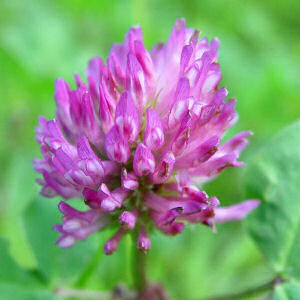
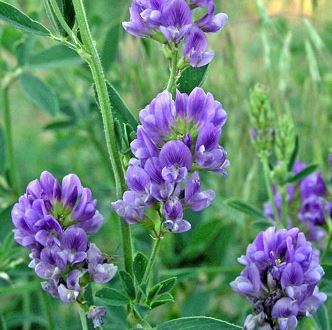
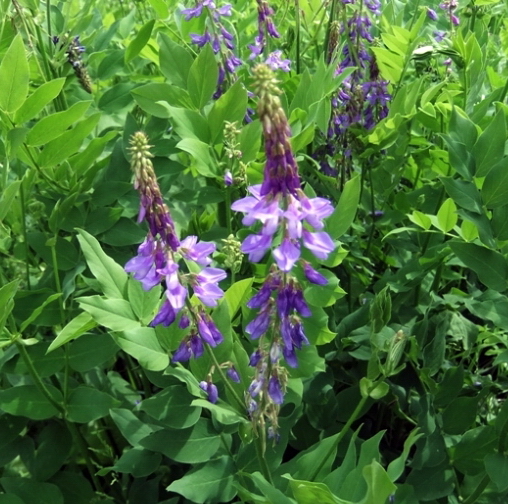
According to conducted field trials, Albit treatment of fodder grasses (galega, lupine, alfalfa, vetch, clover) increases:
- One of the few products that have proven efficiency and registered for application on fodder grasses (Reg. No. 081-07-866-1)
- Increases the regrowth after overwintering and mowing of clover on average by 36%, fodder galega – by 22%, alfalfa – by 34%, cereal fodder grasses (Festuca rubra, Agrostis capillfris, Poa pratensis, Lolium perenne L. ssp.) – by 34–68%
- Increases yield of green mass by 2-11 t/ha according to average long-term data
- Increases productivity of old-growth plants
- Increases resistance to drought, chilling and underflooding
- Increases resistance to many diseases of fodder grasses: biological efficacy against anthracnose and rust of clover – 92,2% and 72,7%, common leaf spot and Ascochyta leaf spot of alfalfa – 18-31% and 60-70%. As a result, plant losses are significantly reduced
- Increases the coefficient of removal of nutrient elements from soil and fertilizers: N – by 43 and 25%, P – by 33 and 47%, K – by 38 and 18%, respectively
- Stable effect of Albit (repeatability of effect is observed from year to year) is higher in ca. 2 times in comparison with analogues
- Non-toxic (Class 4 Hazardous Agent). Certified for use in organic farming
- Albit has been successfully used for over 20 years (on 70 agricultural crops) by farmers 50 regions of Russia and 25 countries ranging from Germany and Switzerland to China and Australia
- yield of green mass by 2-11 t/hectare;
- yield of seeds by 0,039-0,1 t/hectare;
- germination by 4-13%;
- drought and cold resistance;
- regrowth after skewing by 14,1-34%;
- herbage height and density by 10%;
- resistance to diseases (BE 95-100%)
- tillering and regrowth by 33,6–68%;
- green biomass increment by 7,6–17 %;
- chlorophyll content by 8,6–9,7 % (see details here).
Albit is also tested on fodder cereals used as lawn herbs (meadow fescue, bent, meadow grass, and ryegrass). For these grasses, Albit increases:
Application methods. The main treatment for fodder herbs is foliar spraying. The treatment should be performed in the first half of vegetation (for example, in the stage of budding). Consumption of Albit and Albit working solution is 40 ml/hectare and 300L/hectare respectively. Purpose of Albit foliar spraying is growth stimulation and improvement of mineral uptake. As result, hay harvest is increasing stably approximately by 20%. For enhancement of effect, the twice repeated Albit treatment is possible. It is recommended also to perform an additional foliar spraying after skewing (to accelerate regrowth).
Presowing seed treatment (50-70 ml/tonne of seeds) is also quite effective. Seeds should be soaked for short time in Albit solution conc. 3-5 ml/L. Seed treatment increases germination, stimulate plant growth in early stages of development, protects from root rots and adverse environmental conditions.
Presented techniques (Albit foliar sprayings 40 ml/hectare and seed treatment 50-70 ml/tonne of seeds) are universal for all fodder herbs.
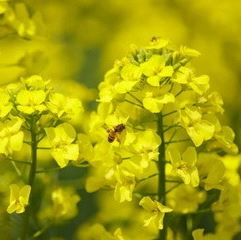
For canola, addition of Albit (60 ml/hectare) to insecticide and herbicide solutions used for foliar sprayings is optimal.
 |
 |
|
 |
 |
 |
| NOTICE: | Information contained on this page is provided according
to the Terms and Conditions located at
www.albit.com/application/disclaimer.php
|