 |
An innovative plant growth promoter for organic and traditional farming
|
  |
Oilseed rape |
|


Materials of this chapter were published in: Zlotnikov, A.K. Efficiency of Albit applied together with insecticides on rape. / Zlotnikov, A.K., Sergeev, V.R., Begunov, I.I., Lebedev, V.B. // Plant protection and quarantine, 2007, Nr. 8, p. 40.
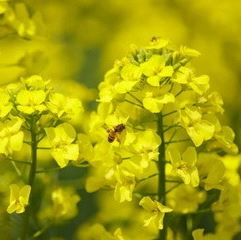 Nowadays, rape (Brassica napus L. ssp. oleifera
Metzg.) is one of the most promising crops. Agricultural lands occupied by
rape fields have been considerably increased over the last years. The
primary reason of such popularity is possibility of using rape seeds as
a source of biofuel (biodiesel). Rape is the crop with high and often
unrevealed potential, which can be realized by efficient plant growth
regulators.
Nowadays, rape (Brassica napus L. ssp. oleifera
Metzg.) is one of the most promising crops. Agricultural lands occupied by
rape fields have been considerably increased over the last years. The
primary reason of such popularity is possibility of using rape seeds as
a source of biofuel (biodiesel). Rape is the crop with high and often
unrevealed potential, which can be realized by efficient plant growth
regulators.
On rape, Albit has been tested since 2005 in field trials of Krasnodar krai, Saratov, Voronezh and in other oblasts of Russia and also in foreign countries: Belarus, Ukraine, Germany, Czech Republic, Latvia, Lithuania, Estonia, Finland, Switzerland and in other countries. Field trials were conducted in Agricultural Research Institute of South-East oblast, All-Russia Institute of Plant Protection, All-Russia Institute of Biological Plant Protection, Belarusian State Agricultural Academy, Latvian State Institute of Field Crops Breeding and also in other institutes and farms on the following plant varieties: Sherpa, F1 Prometei, Ratnik, Oniks, hibrid “Tehnik”, NK Octans, Visby, Ability, Galant, Tavrion, Delight, Vizit, Campino, Banyo and others.
On rape, Albit is applied as antidote for decreasing of side phytotoxic effect of insecticides and herbicides. In Russia, Albit is officially registered as a plant growth regulator of rape. Albit increases field germination, accelerates plant growth and development, improves plant resistance to unfavorable conditions of environment, provides defense against plant diseases, decreases stress after herbicide and insecticide treatments, increases yield, oil content in seed and improves yield quality.
Application recommendations. It is recommended presowing seed treatment (50-60 mL/t) and 1-2 fold foliar spraying (50-60 mL/hа): first – at the rosette stage–stem elongation (BBCH 20-45), the second – at the budding stage–beginning of flowering (BBCH 50-65). A higher dose (60 mL/t) is applied for increasing of seed germination. Foliar spraying may be conducted in tank mix with pesticide treatments according to their recommendations (from the first half of plant vegetation to the flowering stage inclusively). The first spraying of winter rape is recommended to conduct in autumn, the second – in spring. A higher dose (60 mL/ha) is applied for plant immunization and foliar spraying as antidote after pesticide overdose.
Albit on rape:
- Effective antidote for combined application in tank mix with insecticides and herbicides. Adding of Albit as antidote to herbicides preserve 16.8%, 19.5% and 28.3% of crop after chemical stress, insecticide application and in both cases, respectively (data of All-Russia Institute of Biological Plant Protection, Krasnodar krai, 2007). Albit overcomes symptoms of chemical stress, which are observed in drought conditions: burns, necrosis, pause in plant growth, foliar browning (farm Agrofirma Anyak, Tatarstan Republic, 2010)
- Due to antidote effect, the increasing of rapeseed yield (by 0.17-1.09 t/hа, on average by 0.38 t/hа) is observed. Adding of Albit to insecticides gives 4.4 t of extra yield of rape seeds or 1.3-6 L of rapeseed oil per each used mL of Albit (according to data of all conducted field trials since 2010)
- Increases the oil content in seeds by 0.3-1.3%, oil yield by 83-297 L/hа, weight of 1000 grains by 0.08-45.3 g, the number of pods per plant by 6.8-41.8 pcs., weight of seed per plant by 0.68-3.8 g (data of All-Russia Institute of Plant Protection, All-Russia Institute of Biological Plant Protection)
- Albit has immunizing effect against many diseases: biological efficacy of Albit against fusariose, blackspot, sclerotinia, black leg – 48%, 21-79%, 31-75% and 50-67%, respectively
- Albit decreases the chlorophyll content in rape seeds by 1-3.3 abs. % (Västankvarn experimental station, Finland, 2015)
- In the history of agriculture a world record of the highest rape yield 6.86 t/hа was obtained in Estonia due to Albit application (Voore farm, Estonia, 2015)
For several years Albit is one of the leading products among the main plant growth regulators and microfertilizers in Czech market (in field trials of Czech association of manufacturer of oil-yielding crops, SPZO – Svaz pestitelu a zpracovatelu olejnin, www.spzo.cz, Table 1). In 2009-2010, the average yield increase of winter rape was 4.8%, 1 litre of Albit provides additionally 1.46 t of seeds; in 2010-2011 – 9.5% and 2.68 t, respectively.
Table 1. Results of field trials with Albit (Czech association of manufacturer of oil-yielding crops (SPZO), 2-fold with Albit)
Location |
Jizerka |
Pertoltice |
Luze |
Krsice |
Bilovice |
Krasensko |
||||||
Season |
2009-2010 |
2010-2011 |
2009-2010 |
2010-2011 |
2009-2010 |
2010-2011 |
2009-2010 |
2010-2011 |
2009-2010 |
2010-2011 |
2009-2010 |
2010-2011 |
Yield of seeds in control, t/ha (at 8% humidity) |
4.00 |
2.44 |
3.87 |
3.20 |
3.59 |
4.70 |
3.36 |
4.19 |
- |
2.86 |
- |
2.92 |
Yield of seeds after Albit treatment, t/ha (at 8% humidity) |
4.39 |
2.61 |
3.90 |
3.19 |
3.82 |
4.94 |
3.50 |
4.64 |
- |
3.33 |
- |
3.52 |
Yield, % from the control |
109.7 |
107.0 |
100.8 |
99.7 |
106.5 |
105.1 |
104.0 |
110.7 |
- |
116.5 |
- |
121.0 |
Positive influence of Albit was observed already after Albit application for presowing seed treatment of rape. For example, presowing seed treatment with Albit increased field germination, accelerated growth and development of rape seedlings (field trials of All-Russia Institute of Biological Plant Protection, Fig. 1).
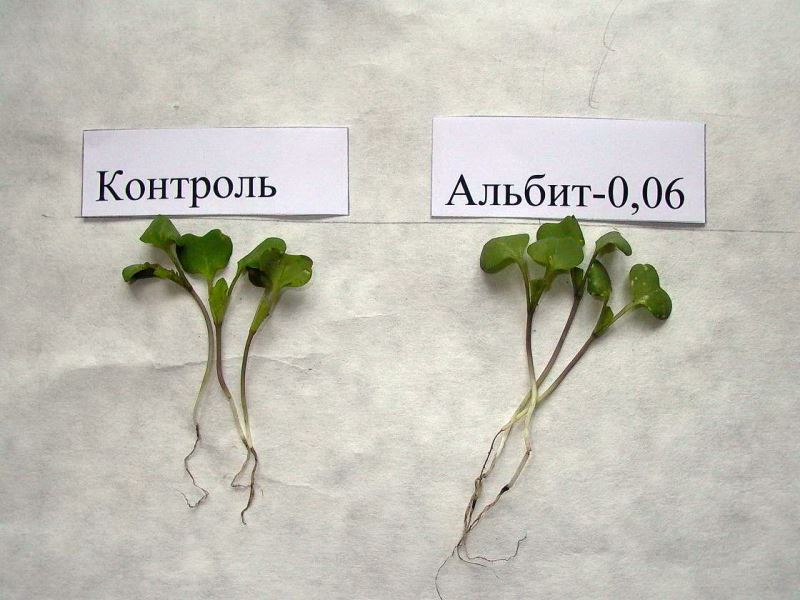
Fig. 1. Influence of presowing seed treatment with Albit (0.06 L/t) on development of seedlings of spring rape var. Onix (field trials of All-Russia Institute of Biological Plant Protection, Krasnodar, Russia, 2007)
Seed treatment with Albit contributes to more powerful development of root system of rape seedlings (Fig. 2).
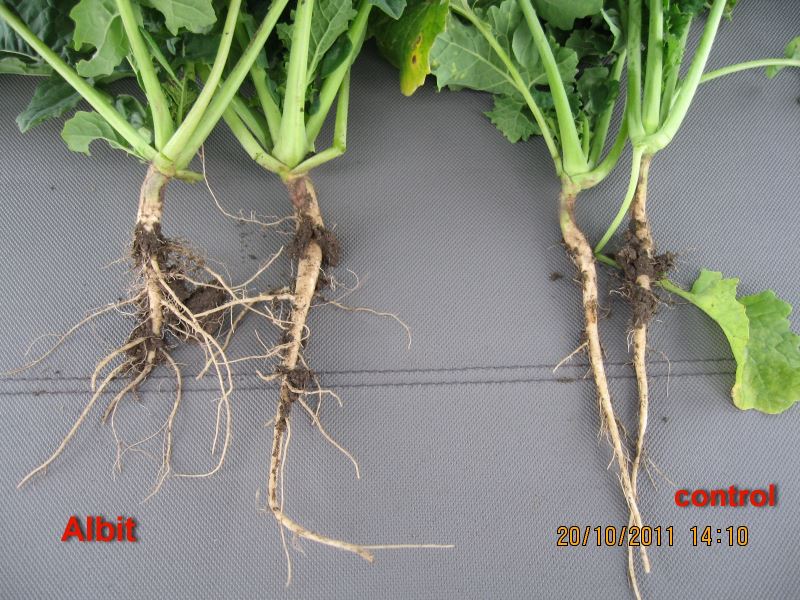
Fig. 2. Winter rape grown in field trials. Left – presowing seed treatment with Albit, right – control without Albit treatment (Kustodija, Lithuania, 2011)
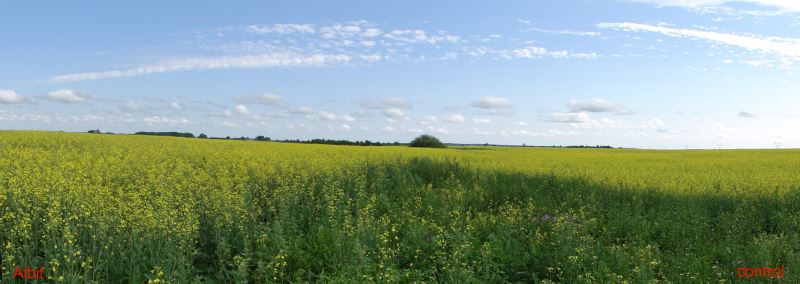
Fig. 3. Field of spring rape. Left – 2 fold Albit application, right – control (farm Suvorovskoe, Vladimir oblast, 2012)
In farm z/s Vaiculevas (Kraslavas, Latvia, 2010), yield increase of spring rape under Albit treatment was 20%. On photo you can see better development of plants with more pods, than in control (Fig. 4).
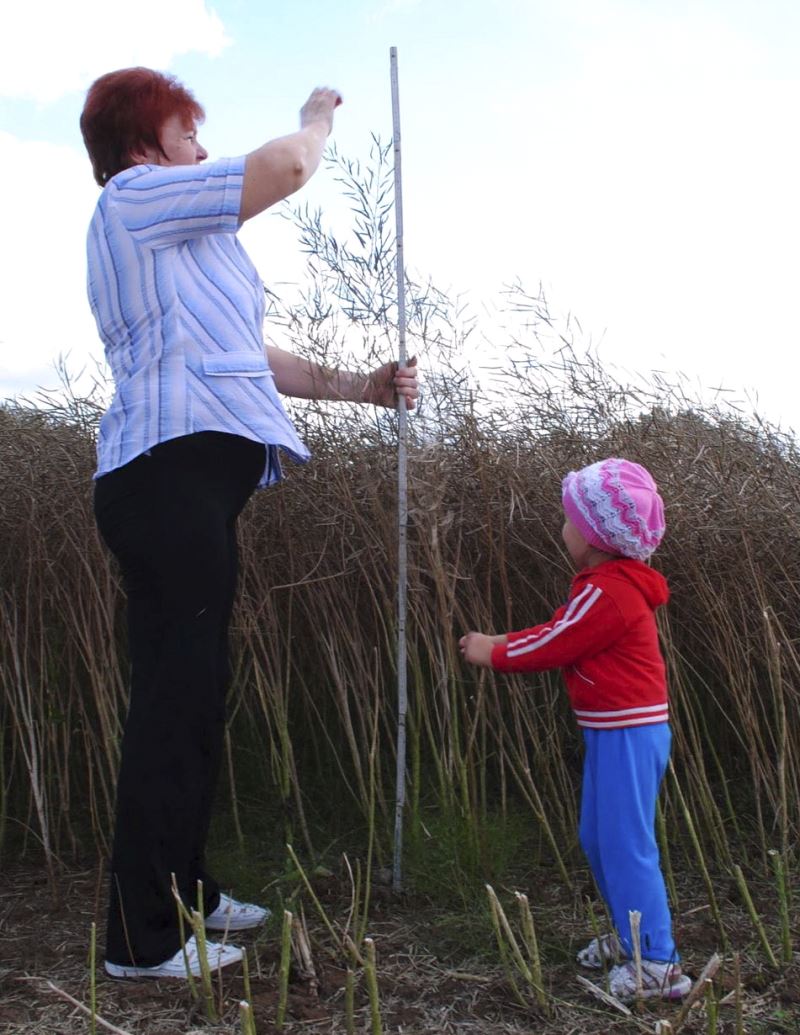
Fig. 4. Influence of Albit on growth and development of rape pods (farm z/s Vaiculevas, Kraslavas, Latvia, 2010)
After foliar spraying with tank mix Albit + chemical plant protection products, plants look healthier and stronger, the number of pods per plant more, than in control (Fig. 5).
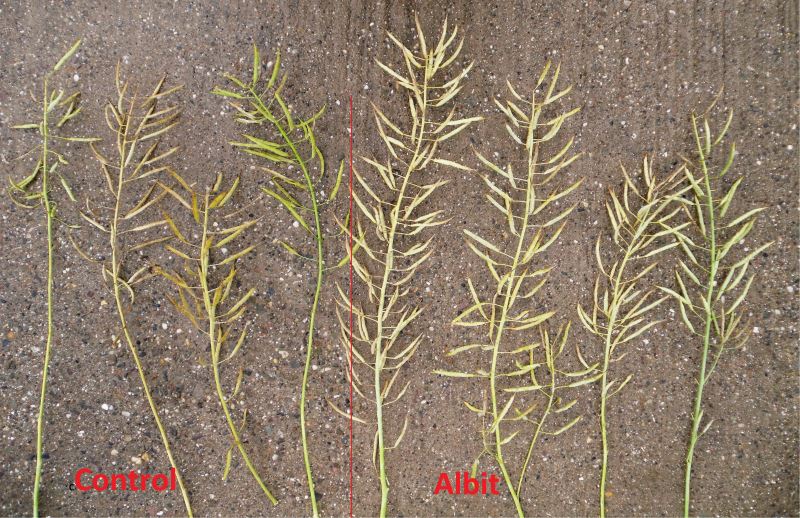
Fig. 5. Field samples of winter rape (Magdeburg, Germany, 2012). Control – fungicide treatment, Albit – treatment with tank mix Albit + fungicide
For treatment of rape, Albit is recommended to be used as an antidote in mixes with insecticides and herbicides. Albit relieves or completely abolishes stress action of these chemicals on rape, that provides saving of considerable part of yield. According to data of All-Russia Institute of Biological Plant Protection (2007), supplement of herbicide, insecticide and their combination with Albit provides yield saving of 16.8%, 19.5% and 28.3%, respectively.
Field trials of 2010 and 2011 conducted in Tatarstan Republic (farm Agrofirma Anyak) clearly demonstrated antidote effect of Albit. Plants were burned due to herbicide treatments. Only urgent foliar spraying with Albit saved plants from death: plants restored and gave new vegetative mass and yield.
Due to antidote effect, Albit increases rapeseed yield (by 0.17-1.09 t/hа, on average by 0.38 t/hа). In the history of agriculture a world record of the highest rape yield 6.86 t/hа was obtained by Margus Lepp on the field 39 hа due to Albit application (Voore farm, Estonia, 2015). It is important to note that farmers in the neighboring farms applied the same pesticides without adding of Albit. Thus, rape yield was lower, than in farm of Margus Lepp.
In Latvia, Albit was applied on spring rape var. Delight (Latvian State Institute of Field Crops Breeding, Priekuli, 2013). In drought conditions Albit application promoted to increasing of rape yield by 10-13% (0.34–0.35 t/hа) vs. control.
Based on many conducted field trials with Albit application, an important regularity was noted: results after it application are more visible when Albit is used in unfavourable weather conditions (Fig. 6). In other words, the lower rape yield in control, the higher yield increase (%%) after Albit application.
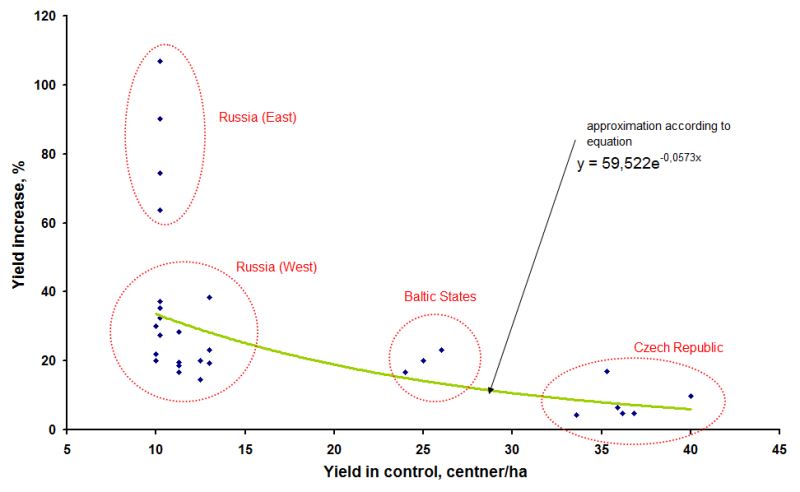
Fig. 6. Results of various regions, where Albit was applied on rape
The most efficient way of Albit application is its combination with insecticides. The insecticide activity remains intact and even increases. Antidote effect of Albit provides considerable yield increase (up to 93% over control, Table 2). For example, in Switzerland (2011-2012) 60% of blossom weever were exterminated after insecticide treatment of winter rape. In variant with Albit + insecticide, 100% of blossom weever were exterminated and yield increase was 0.4 t/hа. Combined application of insecticide + Albit during foliar spraying (at the stage of stem elongation, flowering) of spring rape decreased the number of pests (crucifer flea beetle, trips (imago) and summer cabbage fly), than in variant with pure insecticide treatment (data of All-Russia Institute of Biological Plant Protection, Krasnodar, 2012). A certain protective effect against pests was observed in variant with only Albit application (BE 10-20%).
According to data of conducted trials, adding of Albit to insecticides gives 4.4 t of extra yield of rape seeds, 3.2 t of rape seeds on each litre of Albit or 1.3-6 L of rapeseed oil per each used mL of Albit.
Table 2. Results of field trials on combined application of Albit with insecticides on rape in Russia
| Scientific institute, year | All-Russia Institute of Plant Protection, 2006 | All-Russia Institute of Biological Plant Protection, 2006 | All-Russia Institute of Biological Plant Protection, 2007 | All-Russia Institute of Biological Plant Protection, |
Agricultural Institute of South-East, 2005 | Agricultural Institute of South-East, 2006 | On average |
| Location of trials | Voronezh oblast | Krasnodar krai | Krasnodar krai | Krasnodar krai |
Saratov oblast | Saratov oblast | |
| rape | spring | winter | winter | spring |
spring | spring | |
| Variety | Ratnik | Oniks | Oniks | Tavrion |
Vizit | Ratnik | |
| Insecticide (active ingredient) | alpha-cypermethrin | deltamethrin | deltamethrin | deltamethrin |
beta-cypermethrin | beta-cypermethrin | |
| Insect pests | Meligethes aeneus, Athalia colibri, Entomoscelis adnidis, Pieris brassicae, Barathra brassicae | Meligethes aeneus, Eurydema oleraceum, Psylliodes chrysocephala | Meligethes aeneus, Psylliodes chrysocephala | Phyllotreta nigripes, Thrips, Plutella xylostella, Eurydema oleracea, Delia floralis |
Meligethes aeneus, Eurydema oleracea, Brevicoryne brassicae | Meligethes aeneus, Eurydema oleracea, Brevicoryne brassicae | |
| BE (biological efficacy) of insecticide against complex of pests, % | 94 | 78-98 | 97-99 | 95-100 |
86 | 100 | 78-100 |
| BE (biological efficacy) of tank mix insecticide + Albit against pests, % | 93 | 76-97 | 97-98 | 94.4-100 |
86 | 100 | 76-100 |
| Yield of seeds in control (insecticide only), t/ha | 3.53 | 1.3 | 1.13-1.32 | 2.0 |
1.25 | 1.02 | 1.02-3.53 |
| Yield of seeds (insecticide + Albit), t/ha | 4.13 | 1.55-1.80 | 1.35-1.45 | 2.37 |
1.56 | 1.67-1.97 | 1.35-4.13 |
| Yield of seeds saved due to antidote effect of Albit, t/ha | 0.6 | 0.2-0.5 | 0.13-0.22 | 0.37 |
0.31 | 0.65-0.95 | 0.13-0.95 |
| Yield of seeds saved due to antidote effect of Albit, % | 17 | 19-39 | 10-19 | 18.5 |
25 | 94-93 | 10-93 |
| Oil content in seeds in control (insecticide only), % | 44.9 | 46.9 | 47.0-47.2 | — |
— | — | 44.9-47.2 |
| Increase of oil content due to antidote effect of Albit, absolute % | 0.6 | 0.3-1.3 | 0.7-1.0 | — |
— | — | 0.3-1.3 |
| Oil yield in control (insecticide only), litre/hectare | 1583 | 610 | 531-623 | — |
— | — | 531-1583 |
| Increase of oil yield due to antidote effect of Albit, litre/hectare | 297 | 122-258 | 81-113 | — |
— | — | 81-297 |
| Increase of oil yield provided by using of each ml of Albit, litre | 6.0 | 4.3 | 1.3-1.9 | — |
— | — | 1.3-6.0 |
| Tested application rates of Albit, litre/hectare | 0.05 | 0.03-0.06 | 0.06 | 0.06 |
0.05 | 0.03-0.07 | 0.03-0.07 |
| Optimal application rates (in terms of antidote activity), litre/hectare | 0.05 | 0.06 | 0.06 | 0.06 |
0.05 | 0.05-0.07 | 0.05-0.07 |
Albit increases rape yield quality. In conducted trials Albit also increased oil content of seeds by 0.2-3.6 abs. %, oil yield by 82.7-297 L/ha, increased weight of 1000 seeds by 0.08-45.3 g, amount of beans per 1 plant by 6.8-41.8 pcs, weight of seeds per 1 plant by 0.68-3.8 g.
On winter rape var. F1 Prometei Albit was applied 2 fold for foliar spraying. The following results were observed: increasing the number of pods per plant, weigh of 1000 grains, plant height (data of Belarusian State Agricultural Academy, 2013-2015). Yield increase of seeds was 18.3-23.7% vs. control. In addition, oil content increased by 10-11% (3.5-3.6 abs. %).
Presence of chlorophyll in the seeds of canola (rapeseed) is a severe issue. The problem is particularly acute in the northern areas of cultivation, where the seeds don’t have time to develop properly due to the short growing season. Removing chlorophyll from canola oil has high costs. However, it has been proven that application of Albit reduces the chlorophyll content in canola seeds. For example, in the trial that took place in the Institute for Plant Breeding (Jogeva, Estonia, 2011), Albit reduced chlorophyll content of the seeds by 31.2%. Another experiment at the Vastankvarn experimental station (Finland, 2012) showed that the application of pesticides increased the chlorophyll content in the seeds of winter rapeseed by almost seven times relative to the control; then, a single treatment with Albit (60 ml/ha) reduced this figure by 34%. Double treatment with Albit reduced the chlorophyll content by 84%, almost down to the control level (Fig. 7). Seemingly, Albit’s ability to accelerate the maturing of the crop is what causes this effect.
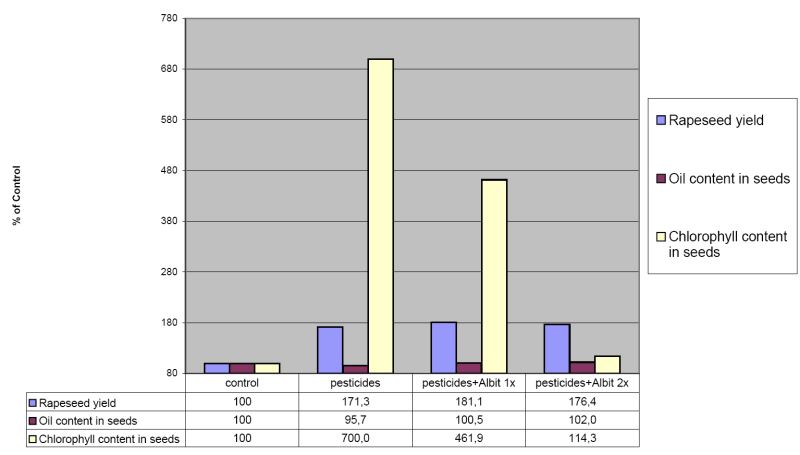
Fig. 7. The effect of single and double treatments with 60 ml/ha of Albit on the yield, oil content and chlorophyll content in seeds of winter rapeseed (Vastankvarn Experimental Station, Finland, 2012)
In conducted trials, Albit has immunizing effect against many diseases: biological efficacy of Albit against fusariose, blackspot, sclerotinia, black leg – 48%, 21-79%, 31-75% and 50-67%, respectively.
According to data of University of Applied Sciences South Westphalia (Germany, 2014), Albit increases plant resistance to infestation by downy mildew (Fig. 8).
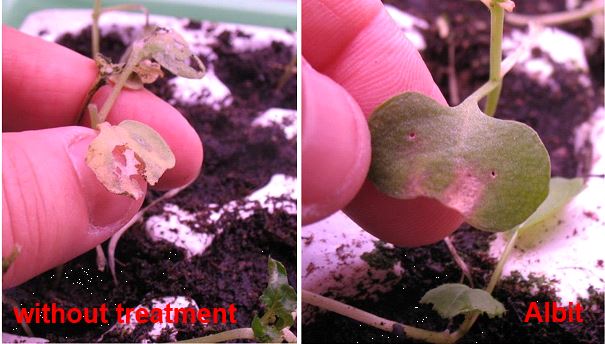
Fig. 8. Influence of Albit on infestation of spring rape by downy mildew. Plants were treated with Albit 3 days after artificial infestation. Photo was made 30 days after infestation (University of Applied Sciences South Westphalia, Germany, 2014)
In the following Table, you may see all reports on performance of Albit on rape, available in English. For all available reports, please see corresponding table on the Russian webpage
№ |
Year |
Country |
Region |
Institute / Farm |
Report |
| 1 | 2015 |
Estonia |
|
Margus Lepp Farm |
 |
| 2 | 2014 |
Germany |
Soest |
South Westphalia University of Applied Sciences |
|
| 3 | 2013 |
Latvia |
Priekuli |
State Priekuli Plant Breeding Institute (SPPB) |
|
| 4 | 2012-2013 |
Czech Republic |
Kromeriz |
Agricultural Research Institute Kromeriz |
|
| 5 | 2012 |
Finland |
Inkoo |
Västankvarn experimental station |
|
| 6 | 2011-2012 |
Latvia |
Stende |
State Stende Cereal Breeding Institute |
|
| 7 | 2011-2012 |
Switzerland |
Vuillerens |
Rudolf Steiner Farm |
|
| 8 | 2011 |
Estonia |
Jogeva |
Jogeva Plant Breeding Institute |
|
| 9 | 2011 |
Finland |
Inkoo |
Västankvarn experimental station |
|
| 10 | 2010-2011 |
Czech Republic |
Prague |
Union of Oilseeds Growers and Processors |
|
| 11 | 2009-2010 |
Czech Republic |
Prague |
Union of Oilseeds Growers and Processors |
|
| NOTICE: | Information contained on this page is provided according
to the Terms and Conditions located at
www.albit.com/application/disclaimer.php
|