|

 |
|
|
Materials used in this chapter were published in the book Biostimulant Albit for increasing yields and protection of agricultures against diseases, A.K. Zlotnikov, Ed. Prof. А. Melkumova. All-Russia Institute of Plant Protection, Russia, 2006. Application recommendations. Recommended full treatment of winter barley with Albit includes presowing seed treatment (application rate of working solution 10 L/t) and double foliar spraying: 1st – at the stages of tillering–stem elongation (BBCH 20–40) and second spraying – at the such stages: since flag leaf to earing–flowering (BBCH 40–70), application rate of working solution: 200–300 L/ha (ground sprayers), 50–100 L/ha (aviation sprayers). The 2nd foliar spraying is conducted at the stage of flag leaf for maximal antidote effect (yield increase), at the stage of earing–flowering – for maximal efficacy against diseases. It is reasonable to apply Albit together with fungicides (full or halved dose) during the presowing seed treatment and with herbicides, liquid fertilizers or insecticides during spray treatments. Seed treatment with Albit in case of presence of smut or other internal diseases must be performed jointly with chemical fungicide treatment, Fig. 1. Recommended application rates of Albit are: 30–40 mL/t, 30–40 mL/ha. The higher rate of Albit (40 mL/ha for foliar spraying) is used for prolonged immunization of plants during vegetation season. For brewing barley 1st foliar spraying is applied.
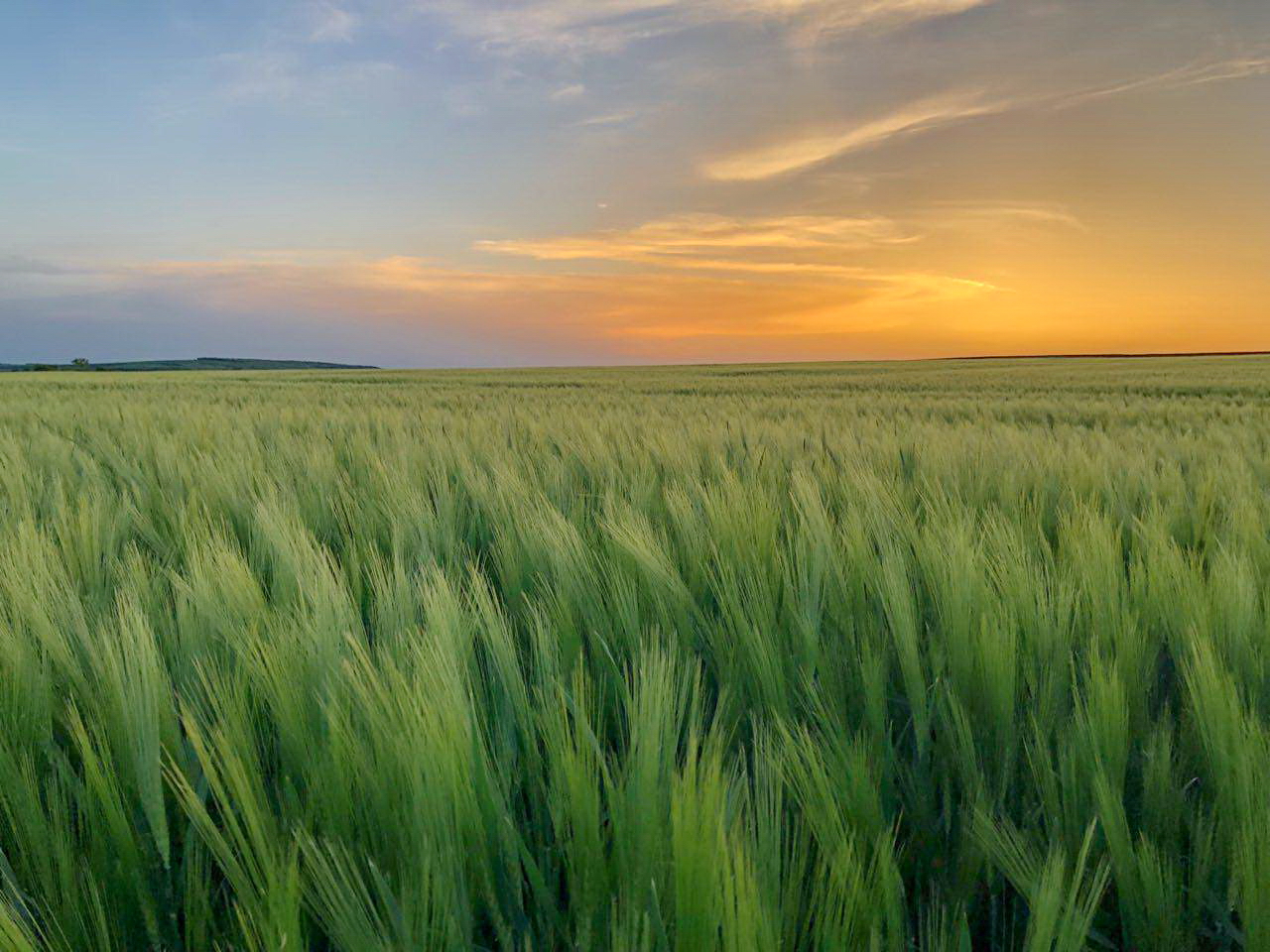
Fig. 1. Field of winter barley after Albit application (Plovdiv Province, Bulgaria, 2018)
On winter barley Albit is applied as antidote for reducing of phytotoxic effect of pesticides. Also Albit increases germination, activates growth and development, increases drought resistance and resistance to other unfavorable climate conditions, increases yield, improves yield quality, increases resistance to diseases, promotes to decreasing of stress after herbicide treatment. Our product is effective against root rots, net and spot blotches. Influence of Albit on winter barley was examined in 4 field trials in Krasnodar Krai. The Trials were carried out in 2003 and 2004 on barley varieties Mikhaylo, Khutorok, and Pavel by Chapaev breeding farm OSC, Yug Agrobisnes LLC, and Kuban experimental breeding farm. Field trials on winter barley were conducted also in other regions of Russia and CIS, in Germany (2011), Switzerland (2012) and in other countries. In the trials, treatment with Albit increased yield of winter barley by 8.1–15 centners/hectare over control (averagely by 10.7 centners/hectare or 21.6%). Thus, winter barley gave one of the highest relative yield increases in response to Albit treatment among all tested crops. High efficiency of Albit application on winter barley might be due to its high original productivity (44–56 centners/hectare). Therefore, although average yield increase due to application of Albit on spring barley is considerably lower (just 3.9 centners/hectare), the relative yield increases for both cultures are approximately the same (18.2 and 21.6%). This fact testifies to ability of Albit to reveal productive potential of both kinds of barley equally efficiently. Also, the formulation is effective against root rots of winter barley. Besides yield increase and control of diseases, Albit increases germination and germination power, accelerates changes of phenological phases, increases height of plants, stem density, total and productive tillering, ear length, number and weight of seeds, decreases ear emptiness.
In the following Table, you can see all reports on performance of Albit on winter barley, available in English. For all available reports, please see corresponding table on Russian webpage.
|
|
||||||||||||||||||||||||||||||||||||||||||||||||





 |
Terms and Conditions
|
|